How to Create a Coaching Course: A Step-by-Step Guide
If you already coach clients, you probably have more than enough knowledge on how to create a coaching course. The harder part is working out how to turn that knowledge into a course that is useful and easy to follow.
The harder part is deciding what goes into it.
- What should your course help someone achieve?
- How many modules do you need?
- What should you include in each lesson?
- And how do you turn everything you know into a course that is easy for someone else to follow?
In this guide, I’ll take you through how to create a coaching course step by step, from choosing the result you want your course to deliver to planning your modules, lessons and supporting resources.
By the end, you’ll have a simple structure you can use to start planning your own coaching course.
Creating Resources for Your Coaching Business?
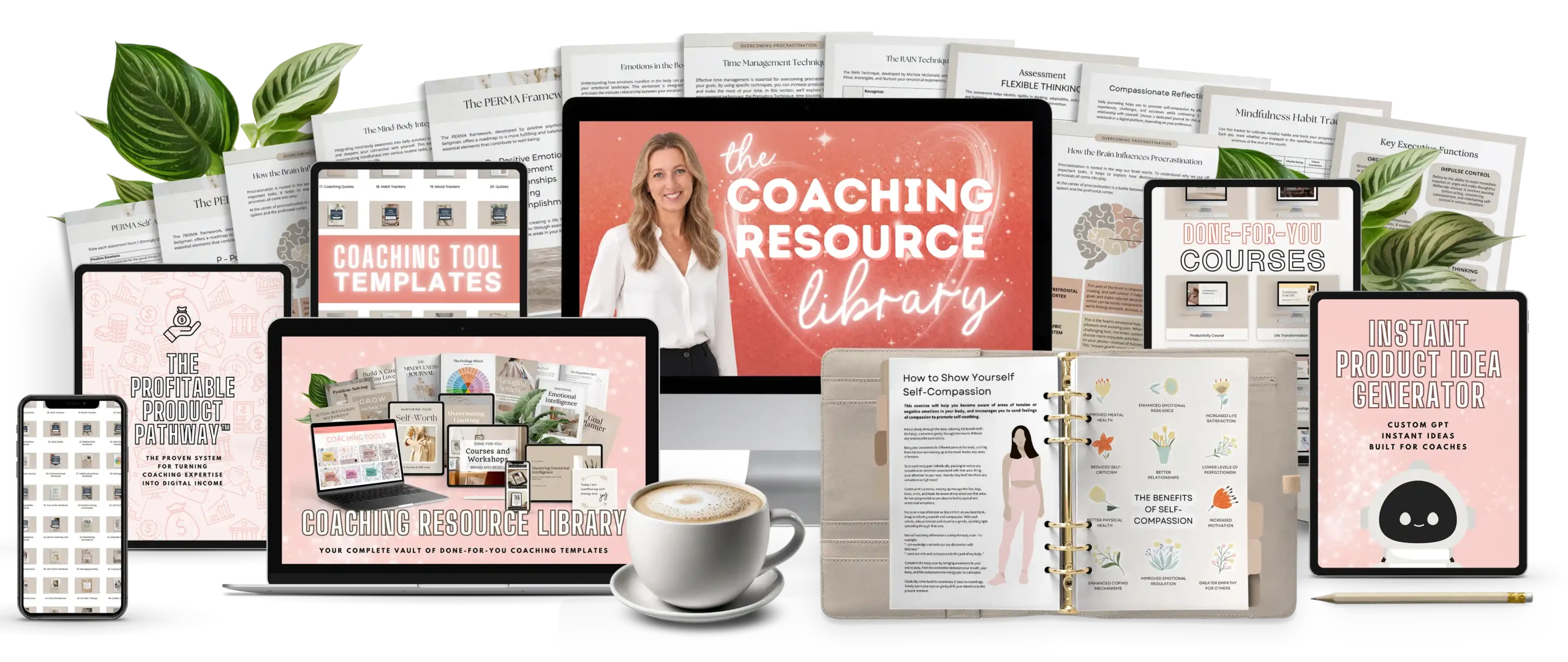
My Coaching Resource Library gives you ready-made resources you can edit, brand and use in your coaching business.
Inside you’ll find coaching courses, workbooks, exercises, client tools and business resources, all in one place with lifetime access.
Step 1: Start With the Result
Before you start planning modules or writing lessons, decide what you want someone to get from your course.
Think about where they will be when they start and where you want them to be by the end.
Your course should help them make that journey.
Try to describe the result in one simple sentence. This gives you something to come back to as you plan your coaching course. Every module, lesson and resource should have a reason for being there and help move someone towards that result.
Once you know the result, it becomes much easier to decide what your course needs to include.
Step 2: Decide Who Your Coaching Course Is For
Next, decide exactly who you are creating the course for.
You may already know this from your coaching work. Think about the clients who would benefit most from the result your course offers.
- What do they want help with?
- What do they already know?
- What questions are they likely to have?
- What would make the course useful and easy for them to follow?
This will help you decide what to include, how much explanation to give and how to talk about the course when you are ready to sell it.
Step 3: Decide What Your Course Needs to Cover
When you create a coaching course, think about what someone needs to learn, understand or do to reach the result you chose in Step 1.
Start by getting all your ideas down. At this stage, you don’t need to worry about modules or what order everything should go in.
Then go through your list and ask whether each topic helps someone move towards the result of the course.
This is a useful way to keep your course focused. It can be tempting to include everything you know about a subject, but your course only needs to include what will help someone get from where they are now to where they want to be.
Once you have your main topics, you can start turning them into a course structure.
Step 4: Turn Your Topics Into Modules
Now you can start building the structure of your coaching course.
Look through the topics you listed in the last step and group together the ones that belong together. Each group can become a module.
Then put your modules into an order that makes sense. Think about what someone needs first before they can move on to the next part.
Give each module one clear purpose. If a module starts covering several different areas, it may need to be split into two.
At this point, you should have a simple coaching course outline showing the journey from the first module to the last.
Step 5: Plan the Lessons in Each Module
Once you have your modules, decide what needs to happen inside each one.
Break each module into smaller lessons. Each lesson should cover one main idea or help someone take one clear step.
Think about what someone needs to know first, what comes next and what they need to do with what they have learned.
By the end of this step, you should have a complete outline of your modules and the lessons that sit inside each one.
Step 6: Add Activities and Coaching Resources
Think about how you can help someone use what they are learning.
Go through each lesson and decide whether it needs an activity, worksheet, reflection question, exercise or other coaching tool.
Think about what would help someone explore the topic, apply it to their own life or take the next step.
This is also a good time to plan any workbooks or other resources you want to include with your course.
Step 7: Decide How You’ll Deliver Your Coaching Course
Now decide how people will work through your course.
Your lessons could include video, audio, written content, presentation slides or a mix of formats. Choose what suits the subject, your audience and the way you want to create the course.
You’ll also need to decide whether your course will be self-paced or delivered over a set period. You might sell it on its own or include it as part of a coaching program.
Keep the delivery as simple as it needs to be. The format is there to help people understand the content and use what they are learning.
Once you know how you’ll deliver the course, you can work out exactly what you need to create.
Step 8: Review Your Coaching Course Plan
Before you start creating your course, look at the whole plan from beginning to end.
- Does each module have a clear purpose?
- Are the lessons in an order that is easy to follow?
- Do the activities and resources help people use what they are learning?
Most importantly, go back to the result you chose in Step 1.
Everything in your course should help someone move towards that result. Once you’ve completed these steps you’ll be ready to create a coaching course with a clear structure and result.
Want a Head Start Creating Your Coaching Course?
If you like the idea of creating a course but would rather not build every lesson and resource from scratch, you can start with one of my ready-made coaching courses.
Each course gives you content you can edit and make your own, including presentation slides and a client workbook.
You’ll find courses covering a range of coaching topics inside my Coaching Resource Library.

DISCLAIMER: The resources, tools, and content provided by miricampbell.com are designed to support mental health professionals in their work. They are intended as professional aids and are not a substitute for therapy, clinical supervision, or medical treatment. Users are responsible for ensuring they use these materials within their scope of practice and professional competency. The content does not constitute clinical, legal, or medical advice.

Hi, I’m Miri
I’m a registered psychologist (GMBPsS) who helps coaches like you create the tools and resources you need to build your coaching programs and offers.