How to Use Digital Products to Attract Coaching Clients
Digital products can be a powerful way to attract coaching clients and introduce people to the way you work. A useful workbook, guide or template gives potential clients a chance to learn from you before they decide to buy a course, book a session or join your programme.
They can also help you grow your email list and create additional income from the knowledge you already use in your coaching business.
The key is choosing digital products that have a clear purpose. Some are ideal for attracting new leads, while others can help turn those leads into paying customers.
Here’s how to use the right mix of digital products to attract coaching clients and build a simple path from discovering your work to buying from you.
Why Use Digital Products to Attract Coaching Clients?
Digital products give potential clients a simple way to experience your approach before making a bigger purchase.
For example, someone might discover a free goal-setting workbook through Pinterest, join your email list to download it, and later buy a more detailed coaching resource or course.
Each product has a job to do. A free checklist can introduce someone to your work. A workbook can help them explore a specific topic in more depth. A paid course can take them through a complete process.
When these products connect naturally, they create a clear route from finding your content to becoming a paying customer.
Use Lead Magnets to Attract Coaching Clients
A free digital product can be the first step someone takes with your coaching business. Instead of simply asking people to join your email list, give them something useful that relates directly to the work you do.
Think about the problem your ideal client is trying to solve. You could create a short workbook, checklist, planner, quiz or set of journal prompts that helps them make progress with that specific problem.
For example, a career coach might offer a career reflection workbook, while a life coach could create a goal-setting planner or Wheel of Life exercise.
The strongest lead magnets also connect naturally to what you sell next. If your paid offer focuses on goal setting, a free goal-setting checklist gives people a relevant introduction to your work and a clear reason to explore your paid resources.
Turn Interest Into Sales With Paid Digital Products
Once someone has found your content and used one of your free resources, a paid digital product can be a natural next step.
This could be a more detailed workbook, a collection of coaching exercises, a template pack or an online course. The product should help with a specific problem and give the buyer something they can put into practice straight away.
Paid digital products can also create another income stream alongside your coaching services. You can sell them through your own website or use a marketplace such as Etsy to reach people who are already searching for digital resources.
I started selling coaching digital products on Etsy in 2016, and it went on to become a major part of my business. I share more about what I sold and what I learned in How I Made £500K on Etsy Selling Coaching Digital Products.
Connect Your Free and Paid Digital Products
Your free and paid digital products work best when they cover related topics and lead naturally from one to the next.
For example, a free self-discovery worksheet could lead to a more detailed workbook, course or collection of coaching tools. Someone who finds the free resource useful already understands your approach and has a reason to explore what else you offer.
Keep the connection simple. Choose one topic, create a useful free resource around it, then offer a paid product that helps people take that work further.
Over time, you can repeat this across different areas of your coaching business and build a collection of digital products that work together.
Start Creating Digital Products for Your Coaching Business
Using digital products to attract coaching clients can start with one useful resource. Choose a topic that connects with your coaching offer, create something that helps your audience with it, and then build from there.
As your collection grows, your digital products can help you attract new people, grow your email list, support your clients and create additional sales.
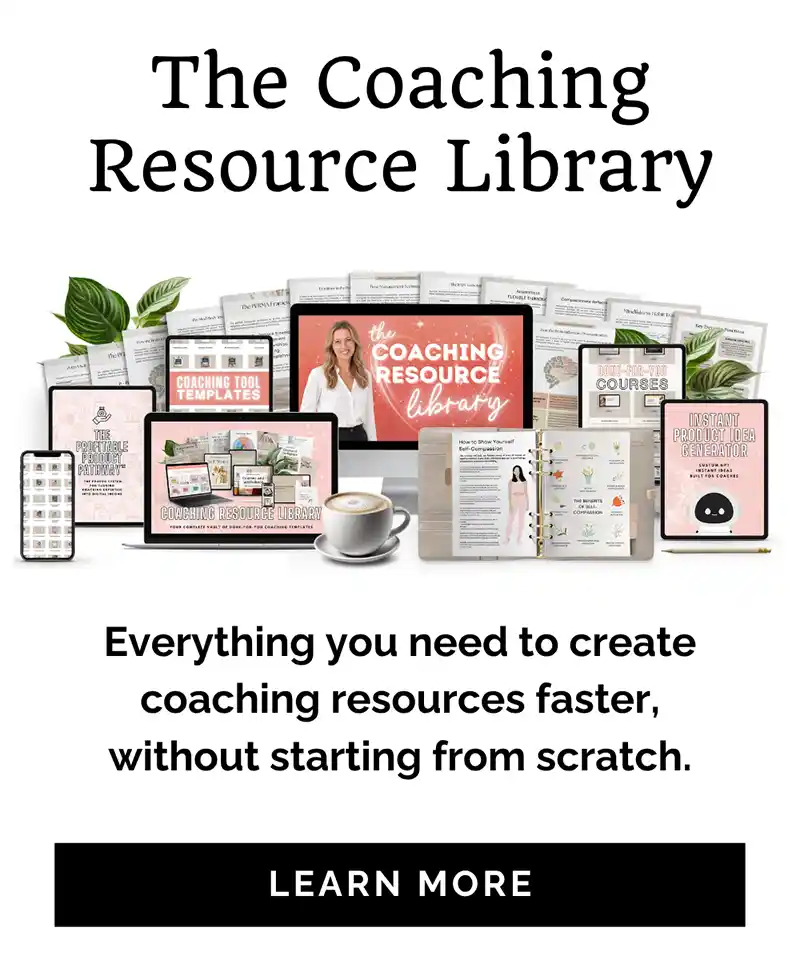
If you want a head start, take a look inside my Coaching Resource Library, where you’ll find ready-made coaching workbooks, courses, worksheets and templates that you can edit in Canva and use in your own coaching business.
Creating Resources for Your Coaching Business?
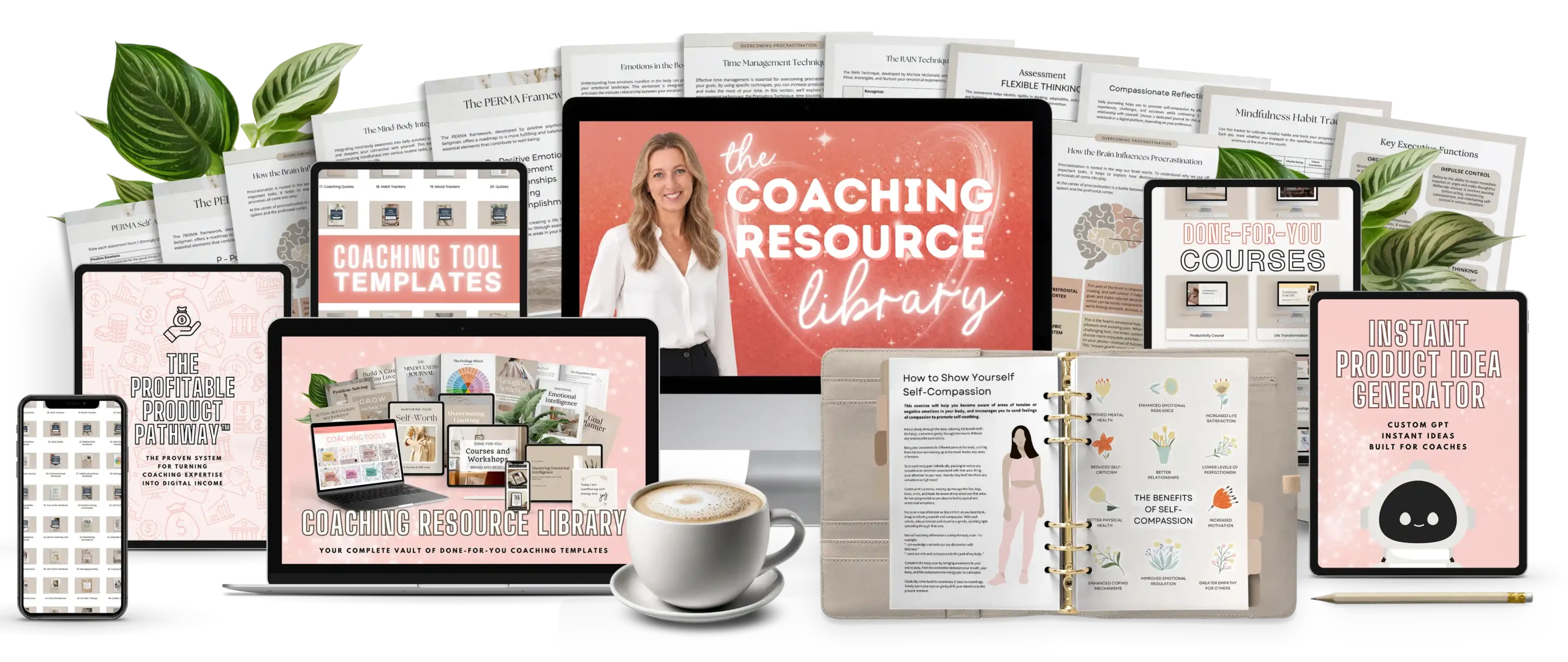
My Coaching Resource Library gives you ready-made resources you can edit, brand and use in your coaching business.
Inside you’ll find coaching courses, workbooks, exercises, client tools and business resources, all in one place with lifetime access.